Vulnerability Isn't Soft. It's the Skill Most Leaders Are Afraid to Master.
This week was a breath of fresh air.
Fuller than usual — two jobs, back-to-back meetings, the kind of week that could easily blur into a series of checkboxes. But it didn't. Because tucked inside the noise were three experiences that stopped me in my tracks. Not because of what was accomplished, but because of what I witnessed: leaders, colleagues, and strangers choosing to be human out loud.
And it reminded me of something I've believed for a long time but don't always get to say plainly: vulnerability isn't a soft skill. It's one of the most advanced — and most avoided — skills in leadership.

Blackwater Falls State Park, WV — July 26, 2025 — 📸 by Serena Riley
The Room That Changed When People Told the Truth
I led two design sessions this week to help reimagine current internal processes. It's been a while since I've facilitated this kind of work, and the moment the first session ended, I felt it — that particular kind of joy that comes not from finishing something, but from witnessing something.
In every technology company I've worked with, the instinct when faced with a challenge is to jump immediately to solutions. Someone names a problem, and within seconds the room is generating answers — for the face-value issue, without pausing to consider the holistic impact of those solutions or whether they're solving for the right thing at all.
What I love about design thinking is that it forces a different kind of courage. It asks people to set aside what they know and what they can already build, and instead start with the question: what should the experience actually be?
When you bring a cross-departmental group of people together and invite them to think without the usual constraints of time, money, or hierarchy — something shifts. The problem stops belonging to one team. It becomes collective. The solutions that emerge are more integrated, more innovative, and owned by everyone in the room.
But none of that happens without one thing first: psychological safety. A room free of judgment and blame. And that kind of room doesn't build itself. Someone has to go first.

“Psychological safety isn’t a prerequisite you can skip. It IS the work.” - Serena Riley
Failing Forward Only Works If Someone Goes First
The second experience was a team professional development session called Failing Forward to Win.
It opened with a leader doing something that not enough leaders do — she shared her own story. Not a polished narrative of triumph, but the real, hard, sometimes painful experiences that shaped how she learned to break cycles of failure and find more meaningful paths forward.
The room changed the moment she started.
Because when a leader goes first — when they lay something real on the table — it gives everyone else permission to do the same. And by the end of the session, people were calling it one of the best meetings they'd had in months, maybe longer.
This is the thing about "failing forward" as a concept: it only works if the culture underneath it is real. You can put the words on a slide, host the workshop, hang the poster. But if the people in the room don't feel safe enough to actually be honest about failure — with their colleagues, with their leaders, with themselves — it's just a slogan.
Vulnerability is what makes the culture real. And it has to start at the top.

“Vulnerability is what makes the culture real. And it has to start at the top.” - Serena Riley
What Happens When You Give Without a Title
The third experience took me outside my organization entirely.
I participated in Thomson Reuters' Social Impact Sprint — a day of donating our expertise to help non-profit organizations work through real business challenges. My group worked alongside two employees from the Great North Innocence Project out of Minnesota, an organization dedicated to helping free wrongfully convicted individuals and preventing future injustices.
Their immediate need was practical: as they grow their staff, they needed help building an employee onboarding workflow to get new team members up to speed faster and aligned to their mission. We were glad to help with that.
But the most moving moment of the day had nothing to do with the workflow.
It was when one of the directors spoke about the personal cost of the work — about how bearing witness to the injustices their clients have experienced creates its own kind of trauma for the people doing the helping. About how they have to actively work through that in order to keep showing up for the mission.
She didn't have to share that. But she did. And it changed the entire texture of the room. Suddenly we weren't just consultants donating a few hours. We were humans, sitting with other humans, doing something that mattered.
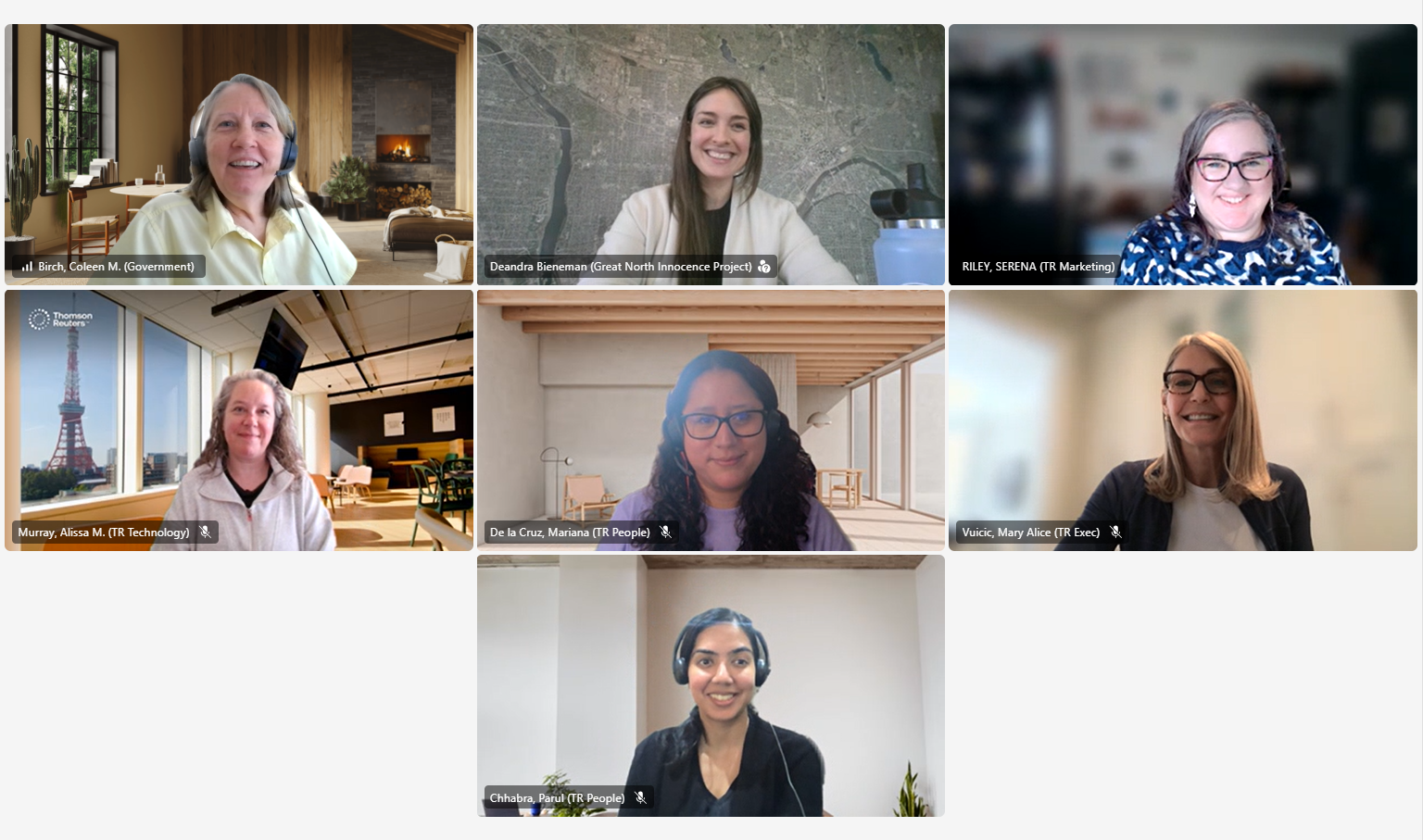
Thomson Reuters Social Impact Sprint Team for the Great North Innocence Project — May 1, 2026
The Through Line
In each of these three rooms, something happened when someone chose to be real.
The conversation went deeper. The work got better. The titles fell away, and everyone became simply — human.
Vulnerability deepens relationships. It creates psychological safety. It builds the kind of trust that makes real collaboration, real innovation, and real healing possible. And while some still equate it with weakness, I'd argue the opposite: it takes far more courage to be honest than to be protected.
When I think back over 20+ years of my career, the leaders who inspired me most weren't the ones who sat behind the authority of their titles. They were the ones who were willing to share their own experiences — the struggles and the triumphs both — because they understood that their humanity was an asset, not a liability.
When I think back to the teachers who shaped me, the ones I remember are the ones who brought real life into the room. Who made the learning feel like it mattered beyond the classroom walls.
And when I think about the guests who've come through the doors of The Stacy Mansion — the weekends I leave feeling like my cup has been filled are because of the ones who didn't just rent space with us. They shared their stories. They let us in.
It's human nature to want connection and meaning. Vulnerability is one of the most direct paths to both.
We've all been taught, in one way or another, to mask our emotions — to present the composed version of ourselves, especially at work. But it's actually the act of letting people see us that allows us to be more fully human. And more fully effective.
The Question I'll Leave You With
When was the last time you went first?
Not your team. Not your culture. Not a workshop or an initiative. You — choosing to be honest, to be real, to be human in a room that wasn't sure it was safe to do that yet.
That's where it starts. Every time.